
Ridge Tile Repointing in Dundrum, Dublin 16
We recently repointed the ridge and hip tiles on a home in Dundrum, Dublin 16, using new mortar with a strengthening mix and a colour mix to match the existing red roof tiles.
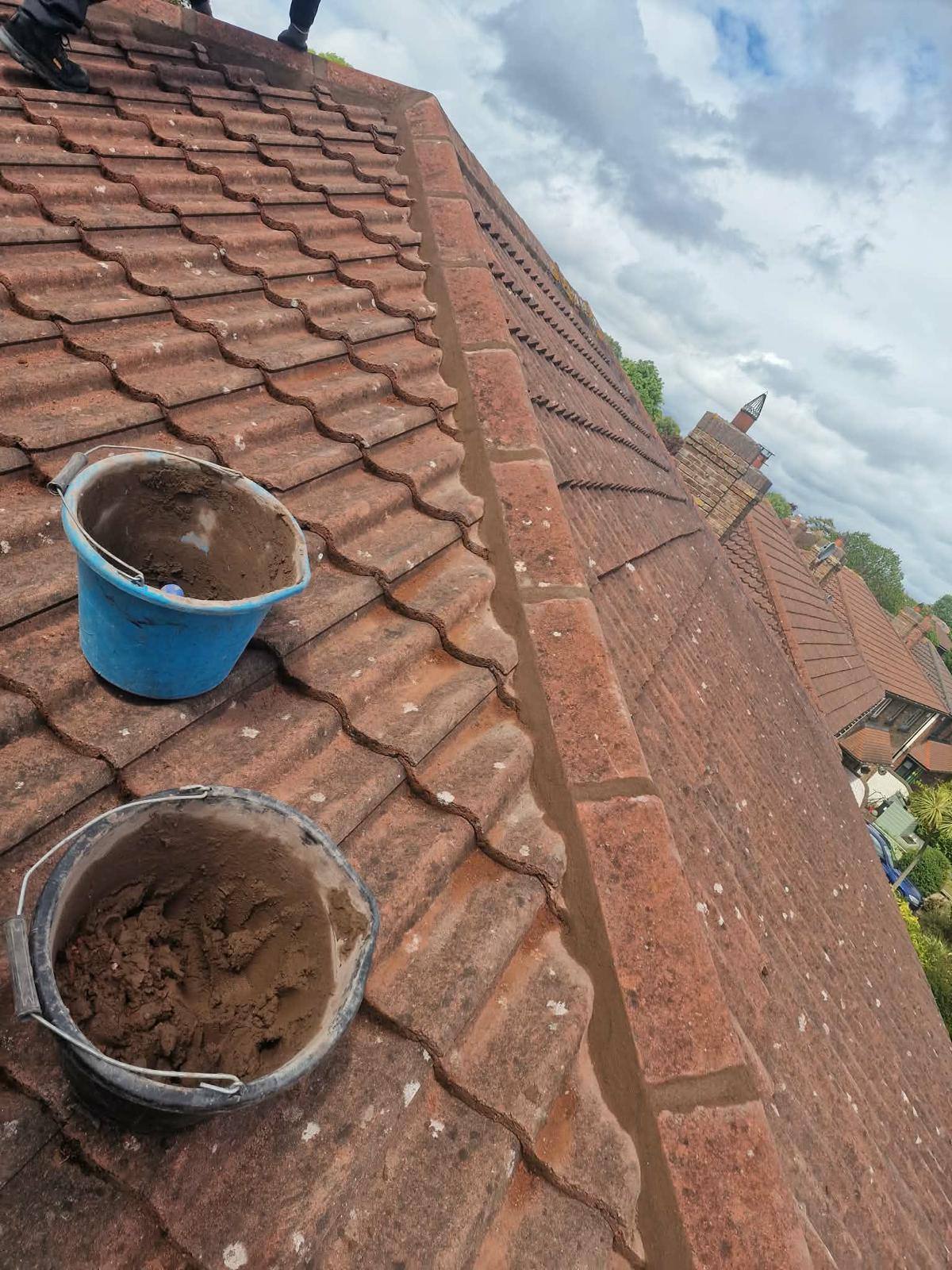
Fresh, colour-matched pointing along the ridge line in Dundrum, Dublin 16.
We recently repointed the ridge and hip tiles on a home in Dundrum, Dublin 16, using new mortar with a strengthening mix and a colour mix to match the existing red roof tiles. Here's what the job involved, the mix we use for this kind of work and how the finished roof looks. It's the kind of job our team does alongside roof repairs in Dublin across the city and county.
The problem: why ridge pointing fails
The ridge and hip tiles along the top and corners of a tiled roof are bedded and pointed in mortar. These are the most exposed parts of the roof, so that mortar takes the full force of Irish wind and rain. Over time it can crack, shrink away from the tiles or crumble. Common causes include:
- Weathering: years of rain, wind and frost gradually break down the mortar.
- Movement: small amounts of movement in the roof structure can open cracks in rigid mortar.
- The original mix: mortar that was mixed too weak, or not bedded fully, can fail sooner.
When the pointing breaks down, ridge tiles can work loose and water can get in underneath. That's why it's worth fixing cracked or missing ridge mortar early.
What we did
- Repointed the ridge and hip tiles with new mortar along their full length.
- Used a strengthened mortar mix for a stronger, longer-lasting bond.
- Added a colour mix so the new pointing blends in with the existing red tiles.
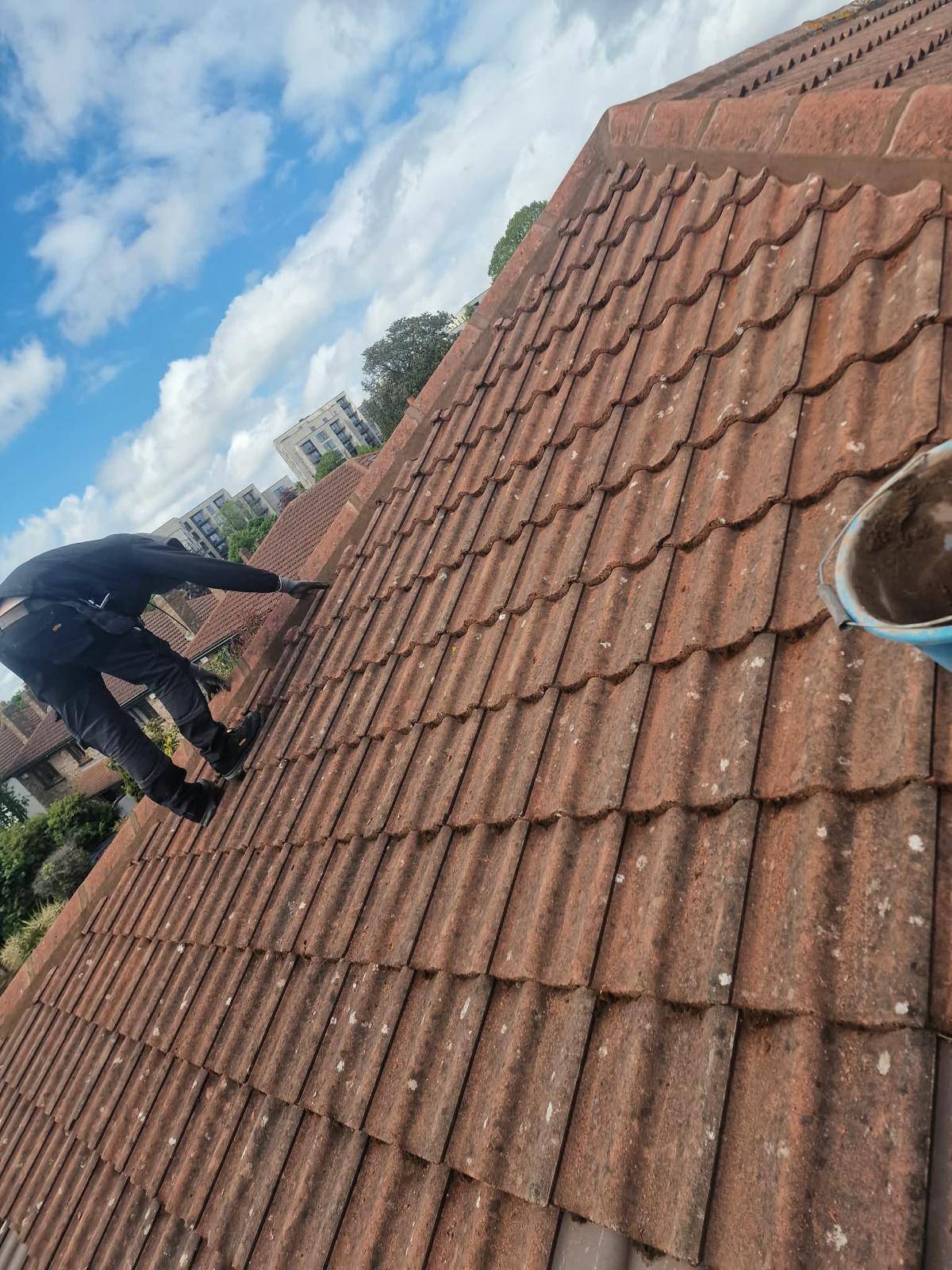
Ridge work like this is part of our ridge and roof tile repairs service.
The right mix for ridge repointing
There's no single 'magic' recipe, but a good ridge mortar usually follows a few well-established principles:
- Sand and cement, around 3:1 to 4:1. A typical ridge bedding and pointing mortar is roughly 3 to 4 parts sand to 1 part cement. Many roofers use a blend of sharp sand (for strength) and soft/building sand (for workability), adjusted to the tiles and the conditions on the day.
- A plasticiser or bonding/strengthening additive. This makes the mortar easier to work and helps it bond to the tiles and resist cracking. It's used at the manufacturer's recommended dose, not as a replacement for cement.
- A mortar colourant. An oxide-based dye is added to match the colour of the tiles. It's dosed to the manufacturer's instructions, because too much pigment can weaken the mortar.
A note on dry-fix: on new roofs in Ireland and the UK, mechanically fixed 'dry-fix' ridge and hip systems are now common, and UK standards (BS 5534) require ridge and hip tiles to be mechanically fixed rather than relying on mortar alone. For repairs to existing mortar-bedded ridges like this one, repointing with a good mortar mix remains the standard approach.
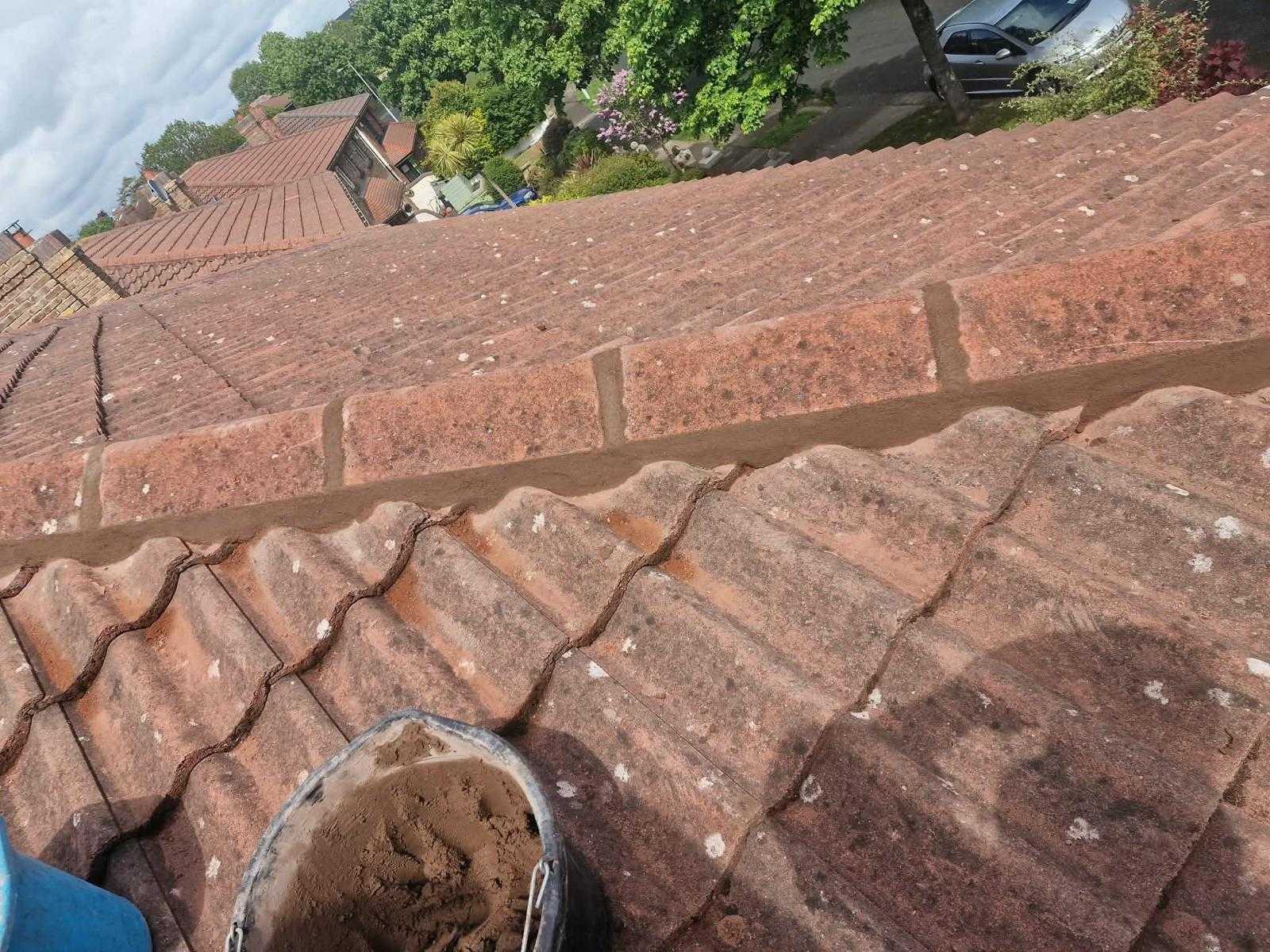
The result
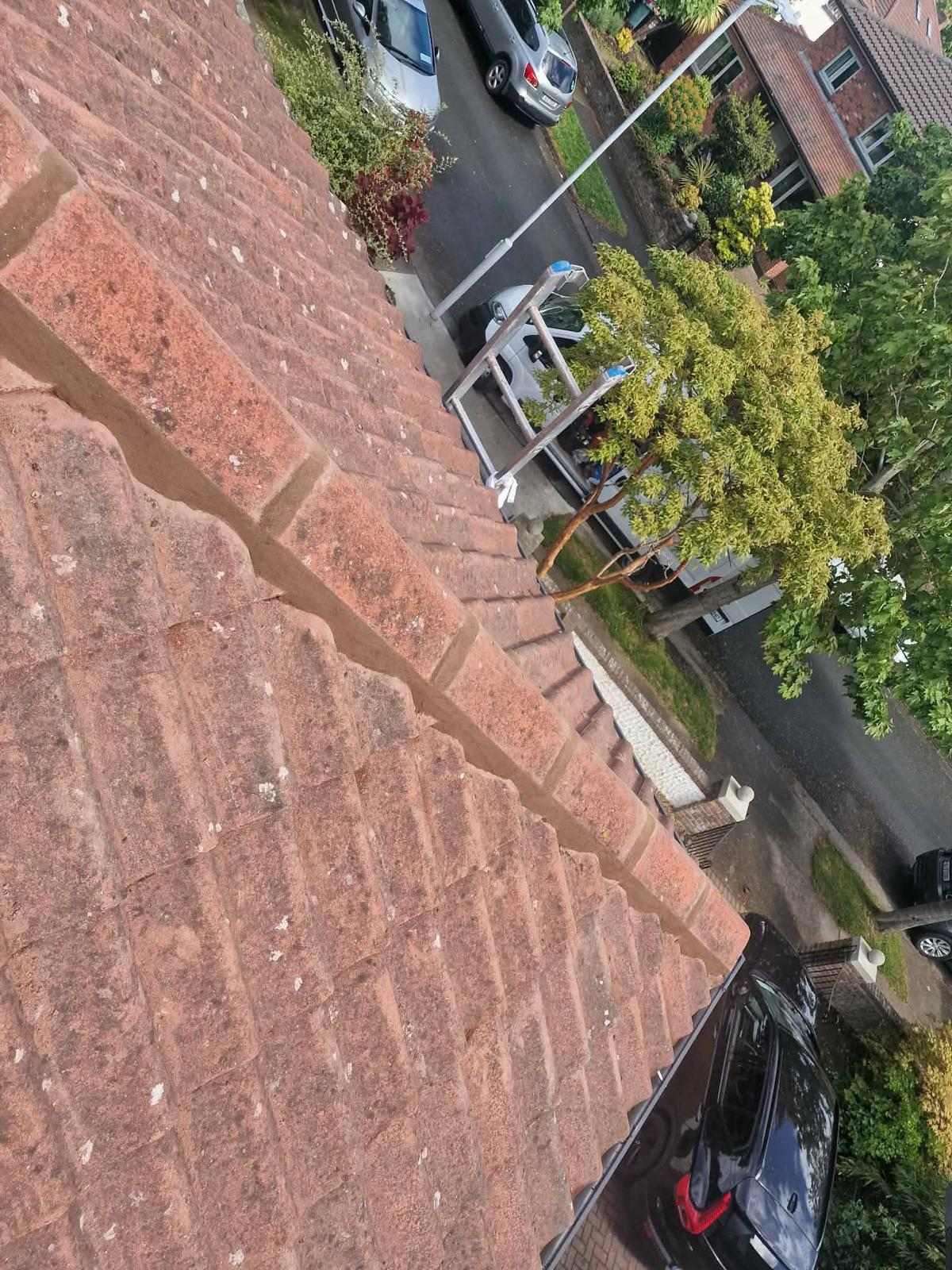
The ridge and hips now have fresh, solid pointing along their length, and the colour-matched mortar sits neatly with the existing tiles.
Ridge repointing questions
How often do ridge tiles need repointing?
There's no fixed schedule. It depends on how exposed the roof is, how old the mortar is and how well it was mixed and laid in the first place. The best guide is the condition of the ridge: cracks in the mortar, gaps under the ridge tiles, or bits of mortar in your gutters or on the ground are all signs it should be checked. It's also worth a look after a big storm.
Can loose ridge tiles cause leaks?
Yes, they can. If the mortar under the ridge tiles cracks or comes away, wind-driven rain can get in beneath them, and a loose ridge tile can shift or be dislodged in strong winds. Not every leak comes from the ridge, though, so it's worth having the roof inspected to find the real cause.
Should I repoint my ridge or switch to a dry-fix system?
It depends on the roof. Where the ridge tiles and the existing bedding are in reasonable condition, repointing with a good mortar mix is a common and cost-effective repair. Where tiles are loose throughout, or the roof is being re-tiled, a mechanically fixed dry-fix ridge system may be the better option. We'll advise on which suits your roof after we've had a look.
More from Dundrum
We work right across Dundrum and Dublin 16. See our roofers in Dundrum page.
Need your ridge tiles checked?
If you've noticed cracked or missing mortar along your ridge, or loose ridge tiles, book a free, no-obligation roof inspection and we'll tell you honestly what needs doing. There's no call-out charge anywhere in County Dublin. We're rated 4.9 from 26 Google reviews.
About Haven Roof Specialists
Haven Roof Specialists is a Dublin roofing company doing quick, efficient roofing jobs for homeowners across Dublin city and county.
More about usRelated Articles
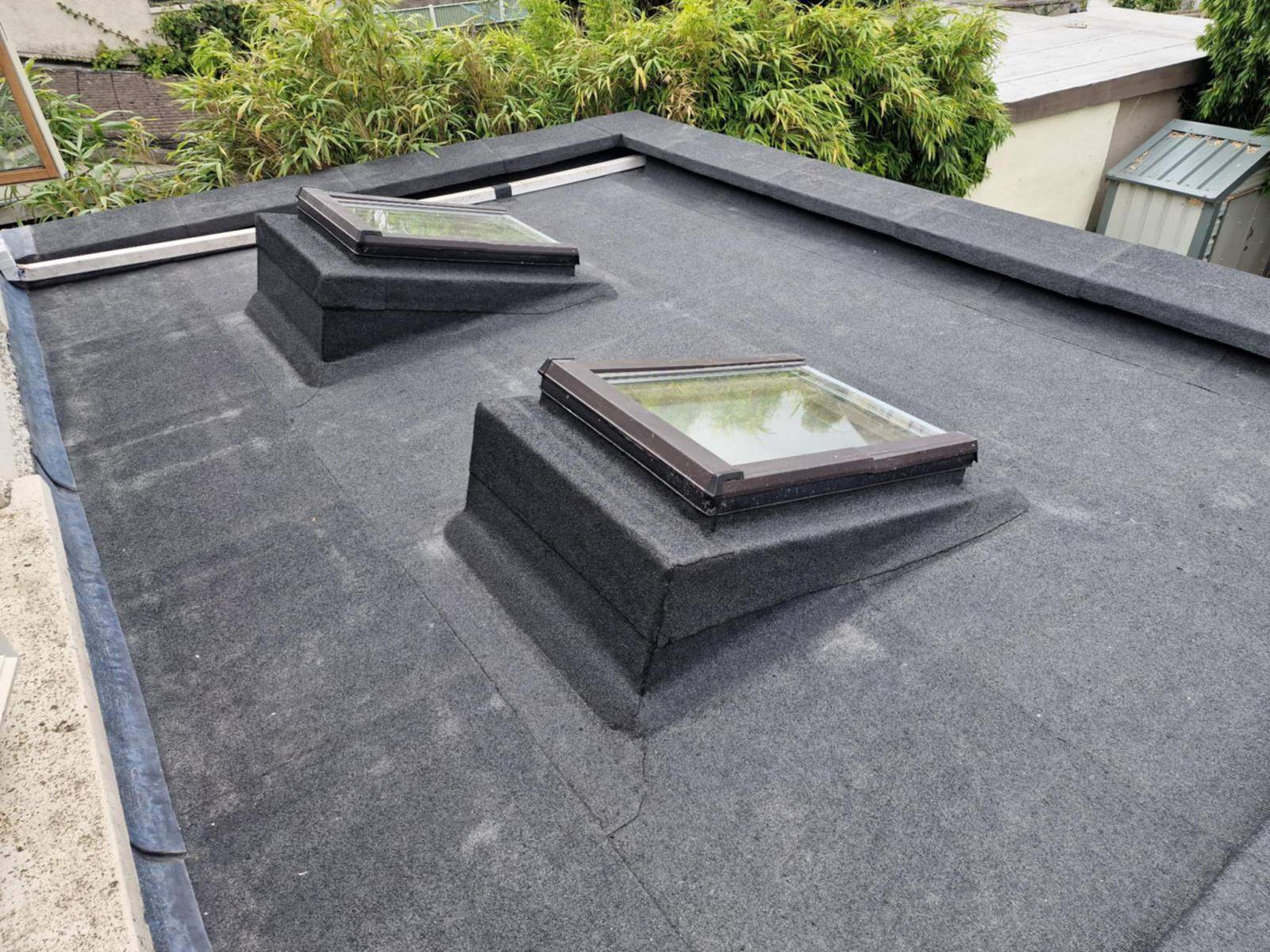
Flat Roof Replacement in Walkinstown, Dublin 12
We completely replaced a flat roof on a home in Walkinstown, Dublin 12. The old roof was replaced with new timber and finished with torch-on felt, and the existing roof windows were kept and re-kerbed on new timber upstands.
Read Article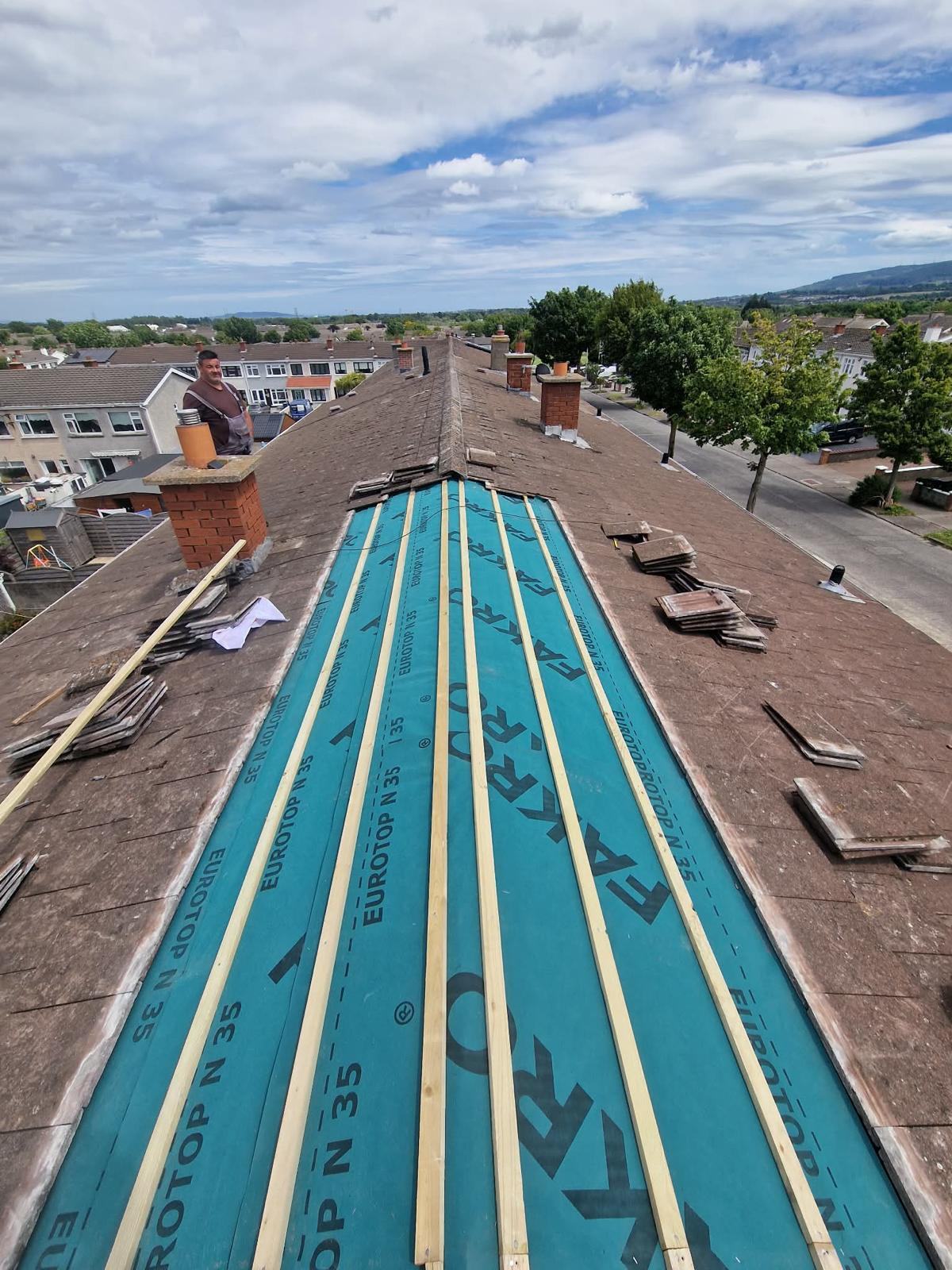
Roof Felt and Fascia Replacement in Tallaght, Dublin 24
Derek asked us to look at the roof of his home in Tallaght, Dublin 24, where the old roofing felt had perished and the fascia boards along the eaves were rotting. We replaced the felt with a new breathable membrane and battens, re-laid the tiles, and fitted new timber fascia boards.
Read Article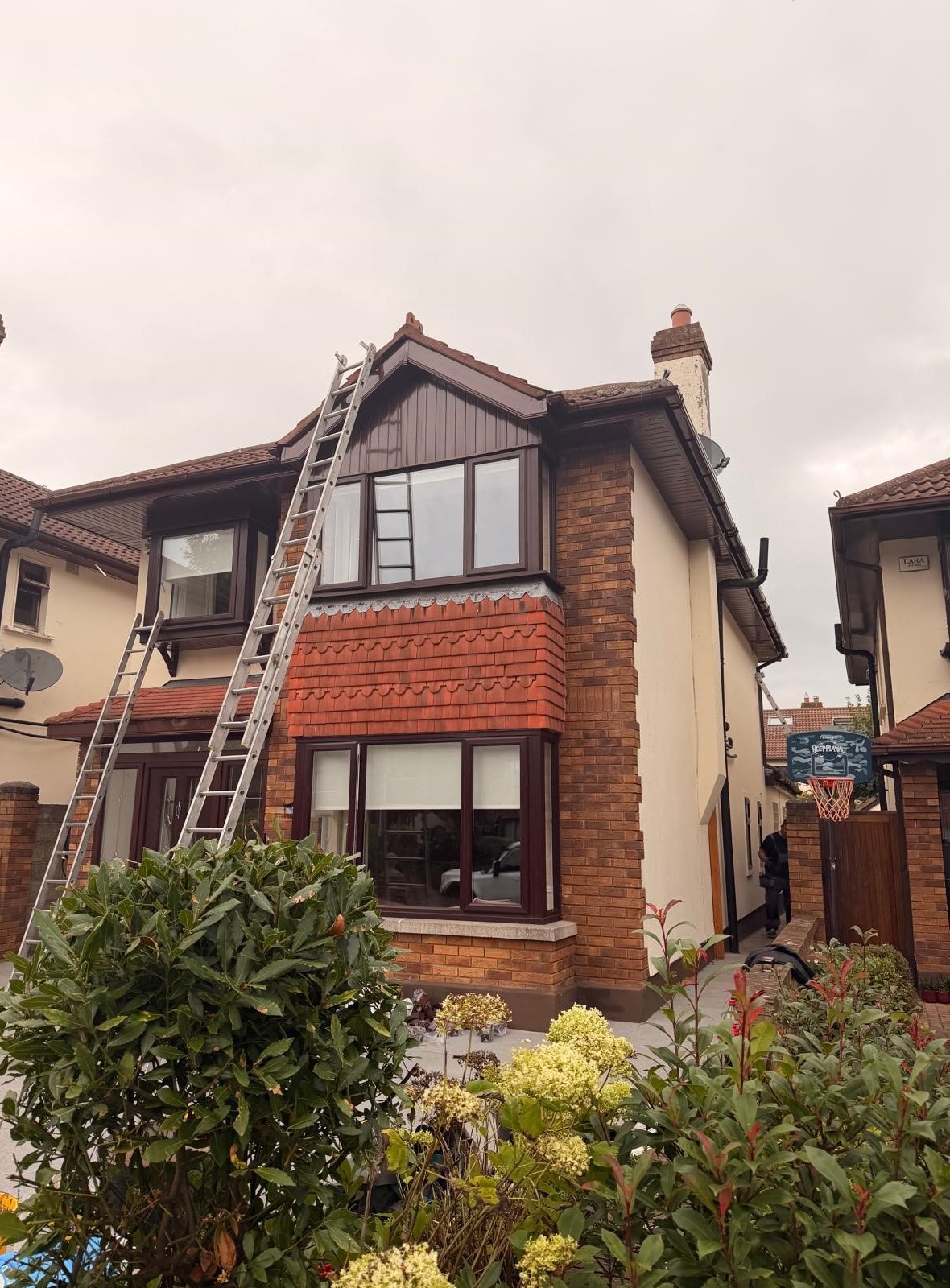
Roofline Replacement in Rathfarnham, Dublin – Fascia, Soffit & Guttering
A complete fascia, soffit, and guttering replacement completed by Haven Roof Specialists in Rathfarnham, Dublin — upgrading aged timber with durable, colour-matched brown uPVC.
Read Article